Application of RFID technology in waste management
Today, as urbanization continues to accelerate, waste management has become an important issue in urban governance. The traditional waste management model has many problems such as low efficiency, difficult supervision, and lack of data, and it is difficult to meet the needs of modern urban development. The emergence of RFID technology has brought revolutionary changes to waste management. Through automatic identification and data collection, waste management has become intelligent and refined.
Main application status of RFID waste management all over the world
European countries are global leaders in waste classification and recycling, and RFID technology is widely used to improve waste classification efficiency and supervision levels.
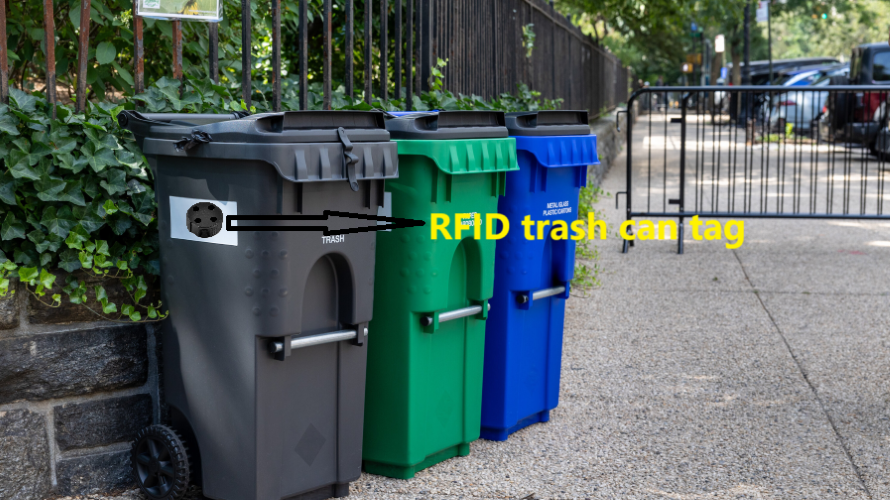
Germany: Germany is a model for garbage classification. Many cities install RFID tags on trash cans and combine them with intelligent weighing systems to record the amount and classification of garbage placed by each household. Through data analysis and incentive mechanisms, residents are encouraged to actively participate in waste classification. For example, the city of Berlin achieved the goal of increasing the garbage collection rate by 15% through the RFID system.
Sweden: Sweden excels in waste recycling and energy conversion. RFID technology is used to track the entire process of garbage from placement to disposal to ensure that recyclables are used efficiently. The City of Stockholm uses RFID systems to optimize garbage collection and transportation routes and reduce carbon emissions.
Netherlands: The city of Amsterdam in the Netherlands embeds RFID tags in public trash cans to monitor the filling status of the trash cans in real time, optimize the frequency of collection and transportation, and reduce operating costs.
North American countries regard RFID technology as an important part of smart city construction and promote the development of waste management in the direction of intelligence and data.
United States: Many cities in the United States have introduced RFID technology in waste management. For example, New York City installs RFID tags in trash cans in commercial districts to monitor waste generation in real time and optimize collection and transportation plans. The city of San Francisco has achieved a significant improvement in the accuracy of garbage classification through the RFID system, reducing the amount of landfill waste by 30%.
Canada: The City of Vancouver has established an intelligent waste management platform using RFID technology to realize full tracking and digital management of waste collection and transportation. The system not only improves waste disposal efficiency, but also provides data support for the formulation of urban environmental policies.
Asia: Rapidly growing RFID waste management market
Asian countries have made significant progress in the field of RFID waste management in recent years. Especially in densely populated large cities, RFID technology has become an important tool to solve waste management problems.
Japan: Japan is at the forefront of the world in waste sorting and resource recycling. RFID technology is widely used in waste management systems in homes and businesses. For example, the city of Tokyo tracks garbage bags through RFID tags to ensure the accuracy of garbage classification and imposes penalties for illegal placement.
South Korea: Seoul City has installed RFID equipment on public trash cans and garbage collection and transportation vehicles, realizing full automated management of garbage collection and transportation. Through data analysis, the layout and operational efficiency of waste treatment facilities are optimized.
Singapore: As a model of smart cities, Singapore applies RFID technology to all aspects of waste management. Through the RFID system, Singapore has achieved accurate statistics and efficient processing of garbage generation, and the garbage recycling rate has been significantly improved.
Common features of foreign applications
From a global perspective, the application of RFID waste management in foreign countries has the following common characteristics:
1.Intelligent management: Realize full automated management of garbage collection, classification and processing through RFID technology.
2. Data-driven: Use the data collected by RFID to optimize the waste management process and improve resource utilization efficiency.
3.Policy support: Many countries promote the application of RFID technology in waste management through legislation and policy support.
4.Public participation: Encourage residents to actively participate in garbage classification and recycling through incentive mechanisms and publicity and education.
Challenges and future trends
Although the application of RFID technology in waste management has achieved remarkable results, it still faces some challenges:
Cost issue: The initial investment in RFID tags and equipment is high, which may limit its promotion in economically underdeveloped areas.
Technical standards: The RFID technical standards in different countries and regions are not unified, which affects the compatibility and scalability of the system.
Privacy issues: Data collection in waste management may involve residents’ privacy, and strict data protection policies need to be formulated.
In the future, as RFID technology continues to mature and costs decrease, its application in waste management will become more widespread. At the same time, the integration of RFID technology with emerging technologies such as artificial intelligence, the Internet of Things, and blockchain will further promote the development of waste management in an intelligent and sustainable direction.
Recommended RFID tags
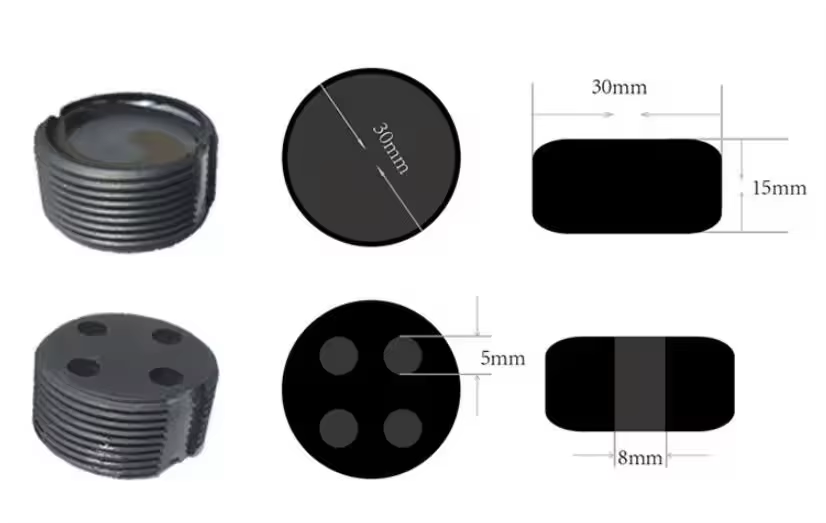
RFID waste bin tag apply RFID to uniquely identify waste bins. When the truck empties the bin, the tag is read and weighed, to accurately simplify billing according to the amount of waste. it supports identification and traceability of waste streams,enable operators to monitor sorting quality, track the number of times a container is placed for collection.