
RFID Book Management: Future Technology to Improve Library Efficiency
In the digital age, RFID (radio frequency identification) technology is completely changing the traditional book management model. This article will analyze the application advantages, implementation strategies and future development trends of RFID in book management to help library managers understand this revolutionary technology.
What is an RFID library management system?
The RFID book management system is a comprehensive solution for intelligent management of library resources using radio frequency identification technology. Compared with the traditional barcode system, the RFID system automatically identifies and tracks books and materials with electronic tags through radio waves, realizing non-contact, batch data collection and processing.
RFID system core components
- RFID electronic tag: microchip + antenna, storing the unique identification information of the book
- RFID reader: sends and receives radio frequency signals, communicates with the tag
- Middleware software: connects the hardware with the library management system
- Self-service terminal: reader self-service borrowing and returning equipment
7 Core Advantages of RFID Book Management
1. Efficient borrowing and returning process
– Supports simultaneous scanning of multiple books (up to 20-30 books per second)
– Self-service borrowing and returning reduces queuing time by 70%
– 24-hour unattended service is possible
2. Accurate inventory management
– Library inventory time reduced from weeks to hours
– Accuracy of locating misplaced books is as high as 99%
– Real-time update of book location information
3. Enhanced security
– The sensitivity of the electronic anti-theft door is higher than that of the traditional magnetic strip
– It can distinguish between borrowed and unborrowed books
– Reduce the loss rate of books by more than 60%
4. Optimize space utilization
– Intelligent bookshelves enable dense storage
– Automatic shelving system saves space
– Reduce the area occupied by traditional book labels
5. Improve user experience
– Simplify the borrowing process and lower the threshold for use
– Mobile APP integration for convenient query
– Personalized recommendation service basis
6. Data-driven decision-making
– Accurately collect circulation data
– Analyze reader behavior patterns
– Optimize procurement and delisting strategies
7. Long-term cost-effectiveness
– Reduce labor costs by about 40%
– Tag life is more than 10 years
– Easy system maintenance
FAQs about RFID Book Management
Q1: Will RFID tags affect the preservation of books?
A: Modern RFID tags use acid-free materials, which meet library preservation standards and do not affect the life of paper.
Q2: Is the RFID system safe?
A: It uses encrypted communication, and its data security is higher than that of the barcode system, and it complies with the ISO 28560 international standard.
Q3: How to convert existing books to RFID system?
A: Professional processing service can efficiently complete label implantation and data conversion, and can process 300-500 books per hour on average.
Q4: Can the RFID system be integrated with the existing library management system?
A: Most RFID systems support seamless integration with mainstream ILS (such as Aleph, Sierra, etc.).
Future development trends
- IoT integration: linkage with smart bookshelves and environmental sensors
- AI application: intelligent purchase prediction based on circulation data
- Mobile expansion: mobile NFC borrowing, AR book navigation
- Deepening of data analysis: reader behavior profiling, resource utilization optimization
Conclusion: Embrace the digital transformation of library management
RFID technology provides libraries with a comprehensive solution to improve efficiency, optimize services and reduce costs. With the maturity of technology and scale effect, the return on investment of RFID systems will continue to increase. It is recommended that library managers formulate a phased implementation plan based on their own needs to gradually achieve the transformation from traditional management to intelligent management.
For more information on RFID library management solutions or personalized consultation, please contact our professional team for detailed solutions and quotes.
Our RFID Library tags
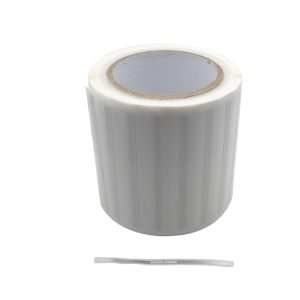
Model: LT9503
Antenna Size: 95*3mm
Label Size: 98*6mm
Chip : NXP UCODE 9
Reading Distance: 5-8m
Material: PET or customized

Model: LT-Uhf Rfid Sticker LED Tag
Label Size: 95x3mm or customizable
Reading Distance: 3 ~ 13 m(Depends on the reader and environment)
Material: PET+ Aluminum Antenna +RFID Chip + LED
EPC memory: 160 bits
User memory: 1312 bits
Unique TID: 96 bits
LED Light:Red / Green / blue