
Why RFID Tags Are Better Than Barcodes for Your Business?
In the field of automatic identification and data collection (AIDC), barcodes and RFID tags are two mainstream technologies. Although barcodes are low-cost and widely used, RFID has significant advantages in efficiency, automation and management capabilities. This article will deeply compare the differences between barcodes and RFID tags and explain why your company should upgrade to RFID technology.
1. RFID vs. barcode: core differences
| Characteristic | Barcode | RFID |
| Reading method | Requires optical scanning, read within line of sight | Radio wave contactless reading |
| Batch reading capability | Can only scan one at a time | Can read hundreds of tags at the same time |
| Reading speed | Slow (reliant on manual operation) | Ultra-high speed reading in milliseconds |
| Anti-fouling capability | Susceptible to stains and wrinkles | Resistant to dirt, waterproof, and interference |
| Data storage capacity | Limited (dozens of characters) | Large capacity (up to KB) |
| Usage scenarios | Retail, simple inventory management | Supply chain, logistics, smart manufacturing, asset management |
Key conclusions
– RFID does not require manual alignment and scanning, greatly improving efficiency
– Batch scanning capabilities increase inventory counting speed by more than 10 times
– More durable and suitable for harsh environments (such as warehouses and outdoors)
Why should your business choose RFID tags?
(1) Save time and improve operational efficiency
Traditional barcodes need to be scanned one by one, while RFID can read the entire shelf or pallet of goods at once. For example:
– Warehouse inventory: Manual scanning of 1,000 items may take hours, while RFID only takes minutes
– Retail cashier: RFID self-checkout systems can instantly identify all items in the shopping cart, reducing queues
(2) Reduce human errors and improve data accuracy
– Barcodes rely on manual operation and are prone to missed or mistaken scanning
– RFID automatically collects data to avoid human errors and ensure real-time inventory accuracy
(3) Stronger environmental adaptability
– Barcodes are easily damaged: stains, tears, and fading can make them unscannable
– RFID tags are more durable: waterproof, dustproof, and high temperature resistant, suitable for harsh environments such as manufacturing and logistics
(4) Support advanced data management (readable and writable)
– Barcodes are read-only and information cannot be updated
– RFID tags can dynamically write data (such as production date, logistics status, maintenance records), suitable for asset tracking, cold chain logistics and other scenarios
3. Typical application scenarios of RFID tags
Retail and clothing industry
– Unmanned retail stores: Amazon Go and others use RFID to achieve automatic checkout
– Smart fitting rooms: RFID identifies products, recommends matching items, and improves shopping experience
Logistics and supply chain
– Real-time cargo tracking: full visualization from warehouse to transportation
– Anti-counterfeiting and anti-counterfeiting: RFID unique ID ensures product authenticity
Manufacturing and asset management
– Tool and equipment management: RFID records usage to prevent loss
– Production line automation: RFID identifies parts and improves assembly efficiency
4. How to choose the right RFID tag?
There are many types of RFID tags, and you need to consider the following when choosing:
– Frequency: LF (low frequency), HF (high frequency), UHF (ultra-high frequency)
– Material: paper, PVC, anti-metal tags
– Read and write distance: short distance (1-5cm) or long distance (10m+)
Recommended solutions:
– Warehouse/Logistics → UHF RFID (Long-distance batch scanning)
– Retail/Payment → NFC (HF RFID) (Mobile phone interaction)
– Asset management → Anti-metal RFID tags
5. Conclusion: RFID is the future trend, upgrade as soon as possible to improve competitiveness
Although barcodes are low-cost, RFID has obvious advantages in efficiency, automation, and data management, and is particularly suitable for:
✔ Enterprises that require fast batch scanning (such as logistics, retail)
✔ Industries that require high-precision inventory management
✔ Companies that want to reduce labor costs and improve operational efficiency
Consult RFID solutions now to make your business smarter!
Our RFID tags
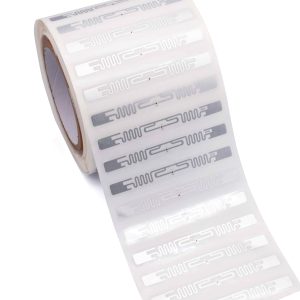
Model: LT9640
Antenna Size: 95*8mm
Label Size: 98*10mm
Chip : NXP UCODE 9
Reading Distance: 5-8m
Material: PET or customized
Craft: Customizable with a text, logo or serial number, Barcode ,unique QR,UID etc
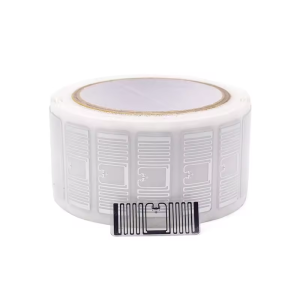
Size: 42*16mm
Chip : NXP UCODE 9
Material: PET or customized
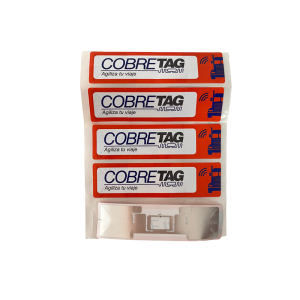
Model: LT-UHF windshield tag
Label Size: 100*30mm
Chip : UHF ucode 9/9XE, impinj M730, IMPINJ R6/R6P, Alien H3/H9
Reading Distance: 1-10M(The size is bigger the reading distance is longer)
Material: Coated paper, PET, PVC or customized
Craft: 1. custom printing logo, text 2. pre-code: URL, text , numbers 3. size, shape