
RFID UHF anti-metal tag: a smart solution for industrial automation
In today’s rapidly developing Industrial 4.0 era, RFID UHF anti-metal tags are becoming a key technology in asset management, logistics tracking and smart manufacturing. This smart tag designed specifically for metal environments overcomes the problem of traditional RFID performance degradation on metal surfaces, providing companies with more efficient and reliable identification solutions. This article will explore the technical characteristics, application scenarios and how to choose a product that suits your business needs.
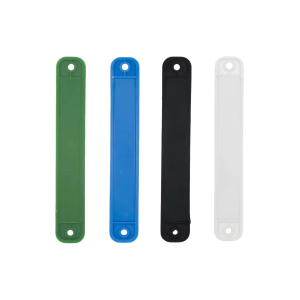
What is an RFID UHF anti-metal tag?
RFID (Radio Frequency Identification) UHF anti-metal tag is an electronic tag specially designed for metal surface, and its operating frequency is usually between 860-960MHz (UHF band). Different from ordinary RFID tags, anti-metal tags adopt special design and materials, which can effectively reduce the interference of metal surface to radio frequency signal, and ensure stable reading and writing performance in harsh industrial environment.
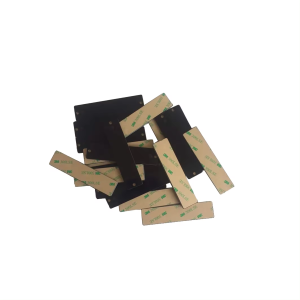
Core technical features
- Anti-metal design: Use special isolation layer or foam material to prevent metal from interfering with RF signals
- Long-distance reading: UHF band supports a reading distance of 3-15 meters (depending on the specific model and environment)
- High-speed identification: Can read hundreds of tags at the same time, greatly improving work efficiency
- Strong durability: With waterproof, dustproof, impact-resistant and high-temperature resistant characteristics (IP67/IP68 level is common)
- Large-capacity storage: Usually provides 512bit-8Kbit user storage space
Main application scenarios
1. Industrial asset management
In manufacturing plants, anti-metal RFID tags can be firmly attached to metal assets such as machine tools, molds, and shelves to achieve:
– Real-time location tracking
– Usage status monitoring
– Maintenance record management
– Inventory counting automation
2. Logistics and warehousing
Intelligent management of metal containers, pallets and transport vehicles:
– Automatic recording of inbound and outbound goods
– Visualization of the transport process
– Anti-counterfeiting traceability
– Cold chain monitoring (combined with temperature sensors)
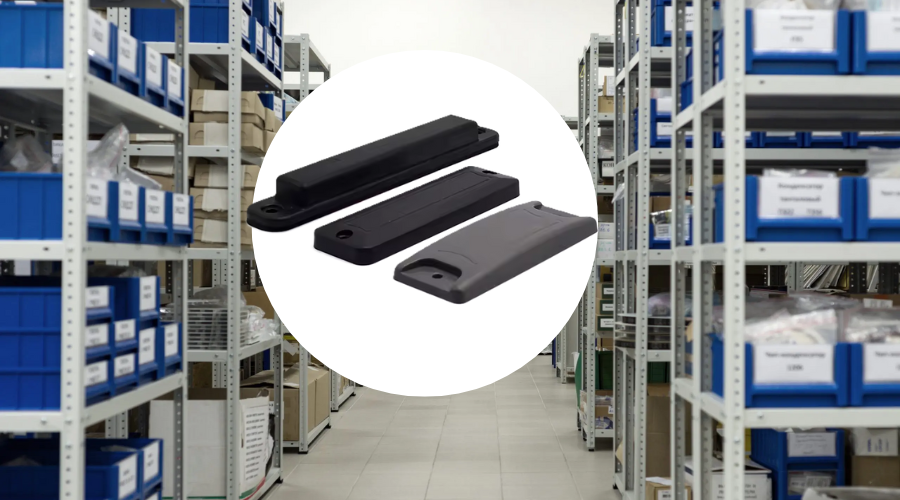
3. Power and Energy
Substation equipment, power tools and oil and gas pipeline management:
– Equipment inspection automation
– Safety qualification management
– Life cycle tracking
– Preventive maintenance reminders
4. Smart buildings
Elevator parts, fire equipment and metal doors and windows management:
– Installation and maintenance records
– Safety inspection reminders
– Spare parts inventory management
How to choose the right anti-metal RFID tag?
1. Consider the working environment
– Temperature range: Industrial environments may require operating temperatures of -40°C to 150°C
– Protection level: Outdoor or humid environments require IP67/IP68 protection
– Chemical exposure: Special coatings can resist oil, acid and alkali corrosion
2. Performance requirements assessment
– Reading distance: Select the appropriate distance (near field or far field) according to the application scenario
– Tag size: Balance readability and installation convenience
– Installation method: Screw fixing, magnetic suction or strong glue sticking
3. Compatibility check
– Ensure that the tag frequency complies with local radio regulations (such as FCC, ETSI)
– Verify compatibility with existing RFID readers
– Consider future system expansion requirements
Return on investment for implementing RFID anti-metal tags
Enterprises that deploy anti-metal RFID systems can usually gain significant benefits in the following aspects:
– Reduce manual inventory time by more than 80%
– Reduce asset loss rate to near zero
– Increase equipment utilization by 15-30%
– Reduce logistics operation time by 20-50%
– Achieve full life cycle data traceability
Future development trends
- Sensor integration: temperature, humidity, vibration and other sensing functions will become standard
- Smaller size: Miniaturized design is suitable for a wider range of application scenarios
- AI empowerment: Combine machine learning to optimize asset management and predictive maintenance
- Environmentally friendly materials: R&D of recyclable and biodegradable label materials
- 5G integration: Deep integration with 5G networks to achieve more real-time data transmission
Conclusion
RFID UHF anti-metal tags are reshaping the way industrial assets are managed, providing companies with unprecedented visualization and control capabilities. Choosing the right anti-metal tag solution can not only improve operational efficiency, but also create new business models and value chains. As technology continues to advance, these smart tags will play a more critical role in the Industrial Internet of Things (IIoT) ecosystem.
Consult our RFID experts now to find the perfect smart identification solution for your metal assets!
Our RFID anti metal tags
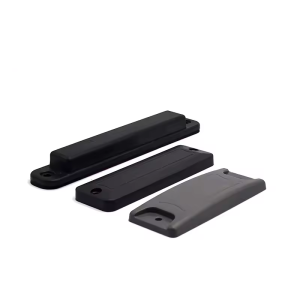
Model: LT-ABS UHF anti-metal tag
Label Size: 135*21mm
Chip : UHF ucode 9/9XE, impinj M730, IMPINJ R6/R6P, Alien H3/H9
Reading Distance: 1-10M(The size is bigger the reading distance is longer)
Material: ABS
Craft: 1. custom printing logo, text 2. pre-code: URL, text , numbers 3. size, shape
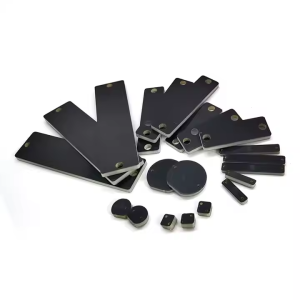
Model: LT-PCB UHF anti-metal tag
Label Size:Dia5/6/10mm, 10*5mm/6*6mm, 8*3mm,10*4mm, or custom
Chip : UHF ucode 9/9XE, impinj M730, IMPINJ R6/R6P, Alien H3/H9
Reading Distance: 1-10M(The size is bigger the reading distance is longer)
Material: PCB
Craft: 1. custom printing logo, text 2. pre-code: URL, text , numbers 3. size, shape
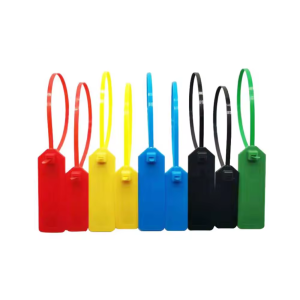
Model: LT-UHF cable tie tag
Label Size: 92*28*4mm
Chip : UHF ucode 9/9XE, impinj M730, IMPINJ R6/R6P, Alien H3/H9
Reading Distance: 1-10M(The size is bigger the reading distance is longer)
Material: ABS + Nylon
Craft: 1. custom printing logo, text 2. pre-code: URL, text , numbers 3. size, shape