
RFID in marathon timing: accurate, efficient and real-time | Lanto
With the rapid development of science and technology, RFID (radio frequency identification) technology is increasingly used in sports events, especially in the timing systems of large-scale sports events such as marathons, where RFID technology has become an indispensable core tool.
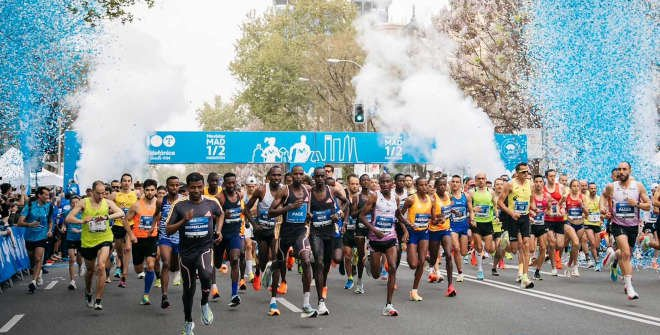
Well-known marathon events in the world that currently use RFID technology for timing:
1. Boston Marathon
The Boston Marathon is one of the oldest marathon events in the world and one of the world marathon majors. Since 2013, the event has fully adopted RFID technology for timing.
An RFID chip is embedded in the participant’s bib number to record the precise time of the start, midway checkpoint and finish line.

2. New York City Marathon
The New York City Marathon is one of the largest marathon events in the world, attracting more than 50,000 runners every year.
The event uses RFID chips to record the sectional results of each participant and provide competition updates to the audience and media through a real-time data tracking system.
3. London Marathon
The London Marathon is one of the world’s major marathon events, known for its high level of organization and charity fundraising.
The event uses RFID technology for precise timing and provides event organizers and spectators with contestant location information through a real-time data tracking system.
4. Berlin Marathon
The Berlin Marathon is famous for its flat track and the birth of multiple world records. It is the first choice event for runners around the world to pursue personal best results.
The event uses RFID chips to record the starting and finishing times of participants, and ensures the fairness of the competition through midway checkpoints.
5.Chicago Marathon
6. Tokyo Marathon
7. Paris Marathon
7. Paris Marathon
8. Shanghai International Marathon
9. Shanghai International Marathon
10. Dubai Marathon
11. Sydney Marathon
Application of RFID technology in marathon timing
1. Precise timing and efficient management
RFID technology automatically identifies the chips worn by contestants through radio frequency signals, enabling high-precision timing functions. Compared with traditional manual timing or barcode scanning, RFID technology can automatically record times when contestants pass the starting point, end point and midway checkpoints, reducing human errors and ensuring the fairness of competition results.
Application scenario: In marathon events, the RFID tags worn by participants (usually embedded in number cloths or shoelaces) will be automatically recognized by the RFID reader on the track, and the time will be recorded in real time and uploaded to the backend system.
Advantages: efficient, accurate, no manual intervention required, especially suitable for large-scale events.
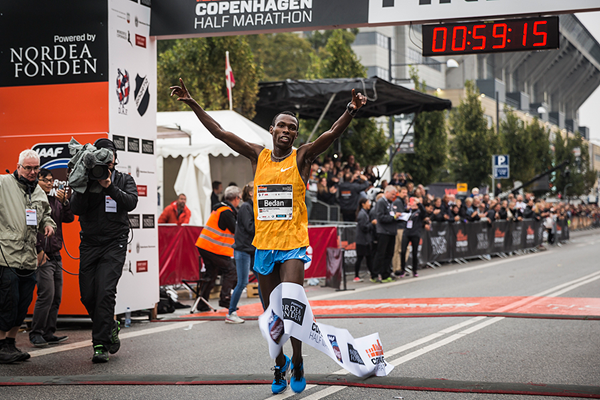
2. Real-time data tracking and event monitoring
RFID technology can not only record the start and end times of participants, but also set up readers at key points on the track (such as 5 kilometers, 10 kilometers, half-way points, etc.) to track the position and speed of participants in real time. This provides event organizers with valuable data support, while providing viewers and media with real-time game dynamics.
Application scenario: Event organizers can monitor the location of contestants in real time through the backend system and detect abnormal situations (such as contestants deviating from the track) in a timely manner.
Advantages: Improve event safety and enhance audience interactive experience.
3. Anti-cheating and fairness guarantee
Each RFID chip has a unique code and is bound to the contestant’s identity information. This technology can effectively prevent cheating, such as proxy running, taking shortcuts, etc., ensuring the fairness and transparency of the competition.
Application scenario: During the event, the RFID reader will record the order and time of each contestant passing the checkpoint, and any abnormal behavior will be marked by the system.
Advantages: Enhance the credibility of the event and improve participant experience.
4. Post-game data analysis and optimization
The massive data generated by RFID technology can be used for post-race analysis to help event organizers optimize track design, resource allocation and event management processes. For example, by analyzing the speed distribution of competitors, the location of aid stations and medical points can be better planned.
Application scenario: After the event, the organizer can generate a detailed participant data analysis report to provide reference for future events.
Advantages: Data-driven decision-making improves the level of event organization.
Recommended RFID tags for marathon timing
Size: 100*30mm or customized
Chip: NXP U9/U9XE
Material: PET, coated paper or customized
Reading Distance:8-10m
Customize service: Custom printing logo, encoding, URL, text , numbers, shape
Application:
RFID marathon timing system
Sports timing RFID technology
Marathon timing solutions
RFID event management
Real-time motion tracking RFID

The application of RFID technology in the field of sports timing such as marathons not only improves the efficiency and fairness of events, but also brings a better experience to event organizers, participants and spectators.